
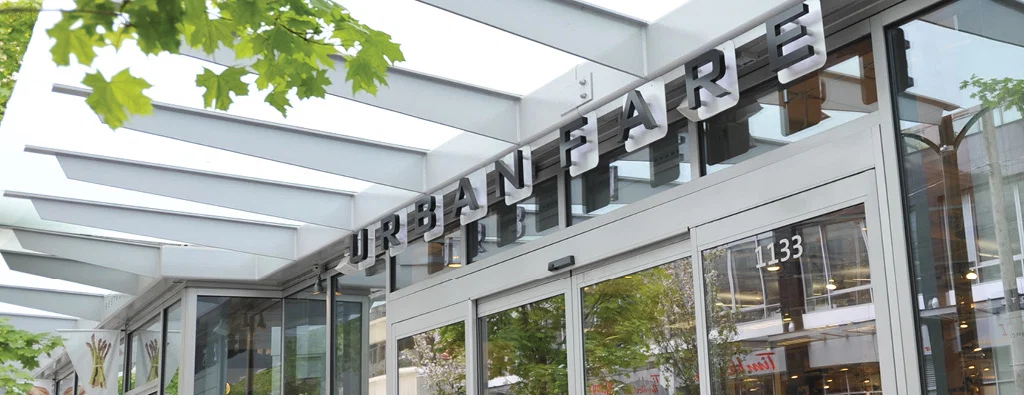
Urban Fare is a premium grocery banner based in British Columbia and part of Pattison Food Group, the western Canadian retail arm of the Jim Pattison Group. The chain is known for its upscale market format, gourmet food focus, and emphasis on fresh, prepared, organic, and specialty items. It is one of the most distinctive grocery names in western Canada because it blends supermarket retail with a restaurant-style, high-service experience.
The brand is concentrated in urban neighborhoods and select high-income markets, where it serves shoppers looking for a more curated and premium grocery trip. Urban Fare has long been positioned above mainstream supermarket formats, with an emphasis on quality, convenience, and specialty merchandising.
History
Urban Fare first opened in 1999 in Vancouver’s Yaletown neighborhood. The concept was introduced as a premium urban grocery store designed to serve downtown customers who wanted a higher-end shopping experience with prepared foods, imported items, and a strong fresh department. Its early success helped establish it as a recognizable upscale banner in British Columbia.
Over time, Urban Fare expanded into a small number of additional locations in Vancouver and other parts of British Columbia. As Pattison Food Group consolidated its various grocery brands, Urban Fare remained a niche premium banner rather than becoming a large-scale chain. In recent years, some Urban Fare locations have been rebranded or adjusted as Pattison Food Group has refined its store portfolio.
Operations & Footprint
As of 2026, Urban Fare operates a limited number of stores, primarily in Vancouver and the Lower Mainland, with at least one location in Kelowna. The chain remains much smaller than Pattison Food Group’s flagship Save-On-Foods banner and is targeted at specific urban markets rather than broad regional coverage.
Urban Fare is part of Pattison Food Group, which is privately owned by the Jim Pattison Group. Its footprint is intentionally selective, and its stores are usually located in high-density or high-traffic areas where premium grocery demand is strongest.
Products, Services & Merchandising
Urban Fare’s assortment focuses on gourmet groceries, fresh produce, premium meats, bakery items, prepared foods, imported products, and specialty health-oriented items. Most stores also feature a coffee bar or restaurant-style food service area, and some locations include a florist or pharmacy component.
The chain’s merchandising is built around convenience and premium presentation rather than discount pricing. Its prepared foods, grab-and-go meals, and specialty products are a major part of the customer experience. Urban Fare also supports online shopping and pickup or delivery options, reflecting the broader expectations of modern urban grocery customers.
Work Environment & Employment
Urban Fare employs store staff, food service workers, department supervisors, and management employees across its premium-format stores. Because the banner is smaller and more specialized than a mainstream supermarket chain, employees often work in a more service-intensive and presentation-focused environment.
The brand is likely to appeal to workers who enjoy food retail, customer service, and specialty merchandising. As part of Pattison Food Group, it benefits from a larger corporate support structure, but day-to-day expectations are shaped by the premium and high-touch nature of the banner.
Financial Profile
Urban Fare does not publish separate public financial results. Its performance is part of Pattison Food Group and ultimately the Jim Pattison Group, both privately held. Because the chain is small and niche-oriented, it is best viewed as a specialty banner rather than a high-volume grocery engine.
Its strengths include brand differentiation, premium pricing potential, and a strong fit with urban shoppers who value convenience and quality. Its limitations are the same ones that affect many upscale grocers: a smaller customer base, higher operating costs, and less room for mass expansion.
Competitive Landscape
Urban Fare competes with other premium and specialty food retailers, including Longo’s, Farm Boy, Whole Foods Market, independent gourmet grocers, and high-end supermarket formats. In British Columbia, it also competes indirectly with Save-On-Foods, Choices Market, and other premium-oriented grocery options.
Its main differentiator is the combination of gourmet food, prepared dining, and a distinctly urban shopping experience. The chain positions itself less as a conventional supermarket and more as a premium food destination for customers who want variety, convenience, and upscale presentation.
Current Status & Outlook
As of 2026, Urban Fare remains active but relatively small, with a narrow store base and a strong focus on premium urban markets. Its long-term role within Pattison Food Group appears to be that of a specialty banner rather than a large expansion format.
The chain’s future likely depends on how well it can maintain its premium identity while adapting to changing urban shopping habits. Its continued relevance will come from strong food service, fresh categories, and a differentiated shopping experience that stands apart from mainstream grocery competitors.
Leave a Reply