
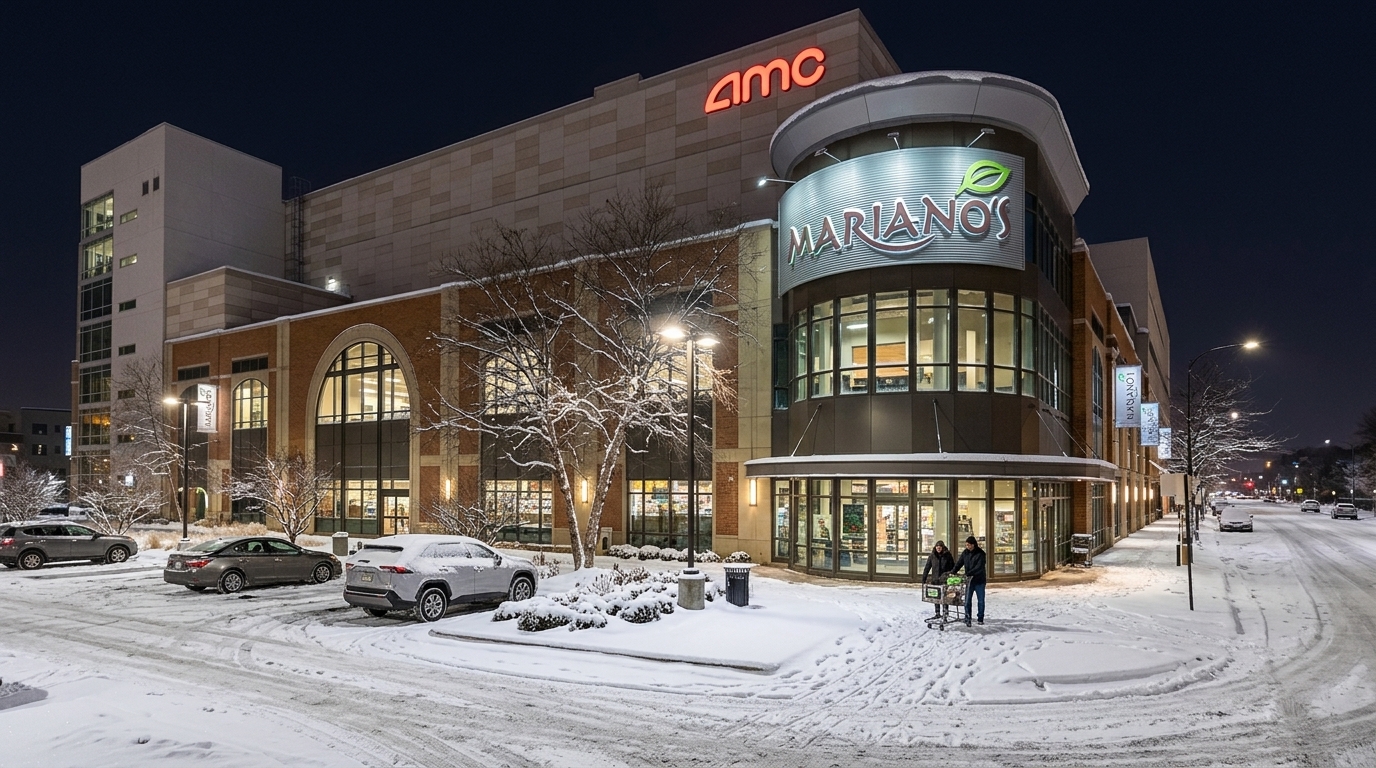
Mariano’s is an American supermarket chain in the Chicago metropolitan area founded in 2010. The chain specializes in fresh groceries, prepared foods, pharmacy services, and online ordering with delivery or pickup options. The chain distinguishes itself through an emphasis on quality fresh produce, in-store prepared meals, and specialty merchandise that appeal to urban Chicago shoppers seeking a more experiential grocery environment.
Mariano’s operates exclusively within the Chicago metropolitan area in Illinois, with all stores located in Cook, DuPage, Lake, Will, and Kane counties. The chain is structured as a subsidiary of Roundy’s Supermarkets, which itself is owned by The Kroger Company. Unlike conventional grocery chains focused primarily on low-cost volume sales, Mariano’s has positioned itself as an upscale format emphasizing fresh, locally sourced items, signature prepared-food offerings, and community engagement.
History
The first Mariano’s opened in 2010 in Arlington Heights, Illinois. The chain launched its first store aiming to address gaps in local grocery shopping experiences by emphasizing quality produce, bakery items, and a vibrant store atmosphere. The building contained 60,000 square feet of retail space. The store was developed under Roundy’s Supermarkets, where Bob Mariano served as CEO and chairman beginning in 2002.
The chain expanded rapidly in its early years. By 2013, Mariano’s owned by Roundy’s had opened its first store in July 2010, and had quickly added 12 other stores while building five more and acquiring 11 Dominick’s locations. The chain expanded rapidly, particularly after the 2013 closure of the rival Dominick’s chain, which created opportunities for new locations in the region. By the end of 2014, Mariano’s boasted 29 locations in the Chicago market and employed roughly 10,000 people.
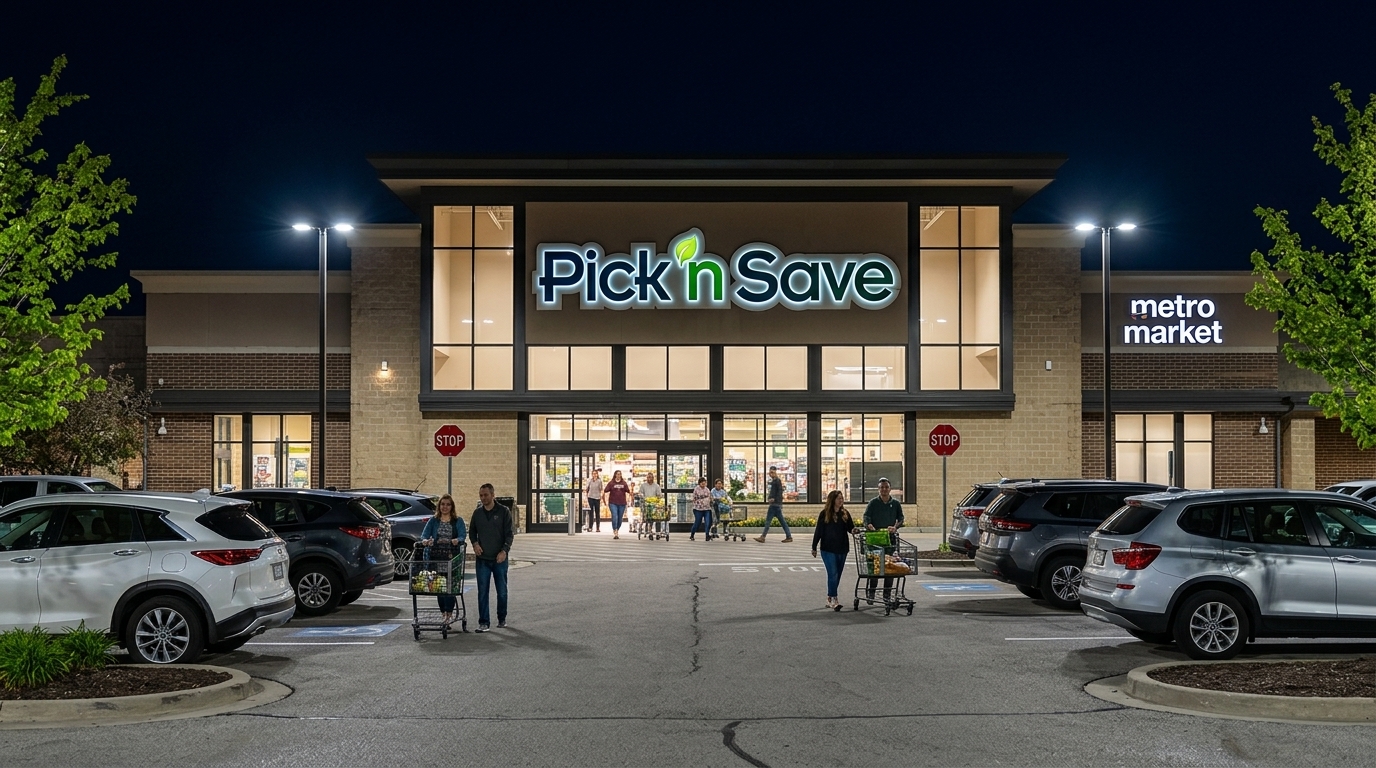
In 2015, Roundy’s was acquired by The Kroger Co. for $800 million, integrating Mariano’s into one of the largest U.S. grocery companies. Following the acquisition, Bob Mariano served as president and CEO of Roundy’s Supermarkets from 2002 until his retirement on September 1, 2016. In 2016, Kroger split Mariano’s and its conventional chains into separate divisions. In September 2018, a group of senior Mariano’s executives left amid a restructuring that saw the merger of the specialty Mariano’s operation with conventional banners Kroger runs under the Roundy’s division, like Pick ‘n Save, Copps and Metro Market.
In 2020, after leaving Mariano’s, founder Bob Mariano launched a new venture. Bob Mariano opened the first location of Dom’s Kitchen and Market, a new kitchen and grocery store concept in the Lincoln Park neighborhood. Spanning 17,800 square feet, Dom’s Kitchen & Market touts “a next-generation food emporium built upon a grocery legacy and neighborhood service with a focus on the experiential love of food.”
In 2024, following a proposed merger between Kroger and Albertsons, regulatory developments affected Mariano’s structure. C&S Wholesale Grocers LLC was set to acquire 413 stores, eight distribution centers and two offices, as well as the QFC, Mariano’s and Carrs brand names as a result of The Kroger Co. and Albertsons Cos. Inc. merger. However, in December 2024, after the U.S. District Court in Oregon and the King County Superior Court for the State of Washington issued injunctions with respect to the proposed merger, Albertsons exercised its right to terminate its merger agreement with Kroger. As a result, the divestiture of Mariano’s stores did not proceed, and the chain remained under Kroger ownership.
Operations & Footprint
Mariano’s is owned by Roundy’s, itself a subsidiary of Kroger. Roundy’s oversees regional banners like Pick ‘n Save and Metro Market in the Midwest. The chain operates through a franchise structure under corporate ownership, with all stores based in the Chicago metropolitan area spanning multiple northern and western suburbs as well as urban Chicago neighborhoods.
Mariano’s operates exclusively within the Chicago metropolitan area in Illinois, with all stores located in Cook, DuPage, Lake, Will, and Kane counties. Store locations are concentrated primarily in northern and western suburbs such as Arlington Heights, Naperville, and Vernon Hills, alongside urban sites within Chicago proper, including neighborhoods like Lincoln Park and Roscoe Village. In 2025, the chain experienced some closures due to operational restructuring. Mariano’s Buffalo Grove at 450 W. Half Day Road in Buffalo Grove, Illinois closed on August 8, 2025, Mariano’s Bloomingdale at 144 S. Gary Ave. in Bloomingdale, Illinois closed on August 15, 2025, and Mariano’s Glenview West at 2323 Capital Dr. in Northbrook, Illinois closed on August 22, 2025.
Products, Services & Merchandising
Departments in the store sell a range of food and drink including coffee and gelato, sushi, rotisserie chickens, smoked ribs, briskets, and sliders, salad bar buffet, oyster and liquor bar, cheese, sweets, juice and smoothies. The fresh produce and floral department features a large selection of daily-sourced fruits and vegetables, including high-quality local options, with organic produce prominently available under the Simple Truth Organic brand.
The prepared foods and in-store eateries department provides convenient, ready-to-eat meals through various counters and grab-and-go sections. The chain offers an oyster bar with fresh-shucked oysters and specialty seafood dishes, a bakery with artisan breads, pastries, cakes, doughnuts and rolls baked daily in-store, along with ethnic and Italian treats, and a full-service pharmacy with immunization services. The stores feature signature proprietary brands and specialty products developed to differentiate the shopping experience from conventional grocers.
The chain offers digital coupons on grocery pickup and delivery, and customers can have groceries and eligible prescriptions delivered in one convenient order. Online ordering, curbside pickup, and same-day delivery through partner services are available to customers in the chain’s service area.
Work Environment & Employment
Mariano’s operates as a division of Kroger through Roundy’s and follows the employment and labor practices of its parent organization. At stores undergoing closure, employees are given the opportunity to transfer to a different location in order to keep their jobs. The chain maintains union representation through affiliations with grocery industry labor organizations, consistent with Kroger’s workforce structure across its divisions.
The chain has historically emphasized customer service and staffing levels as part of its differentiated market positioning. Mariano’s aimed to make the chain the “Nordstrom of the grocery world” through efforts involving lots of organic produce, in-store culinary centers for cooking demonstrations, smoothie and juice bars and a wide array of prepared meals. As Kroger consolidated operations post-2016, some of these experiential elements were reduced or modified to align with corporate efficiency objectives.
Business Model & Financial History
Mariano’s operates under an upscale grocery format designed to capture higher-margin sales through premium positioning and specialty offerings, in contrast to the value or promotional strategies typical of conventional supermarkets. The chain’s economics depend on higher per-unit sales and store productivity relative to average grocery operations. The average Mariano’s store generated about $1 million per week in sales, more than the $750,000 initially expected and nearly twice as much as the average grocery store.
Since 2011, Inland Real Estate Group of Cos. spent nearly $90 million to acquire sites of four Mariano’s stores. This real estate activity reflects developer confidence in the chain’s market viability and its role as an anchor tenant. The economics of Mariano’s stores emphasize site selection in affluent urban and suburban communities where consumer demographics support premium grocery pricing and specialty merchandise.
Following Kroger’s 2015 acquisition of Roundy’s for $800 million, Mariano’s was integrated into Kroger’s broader corporate structure. The consolidation is a way for Kroger to reduce costs as it continues to invest in existing stores and promising growth initiatives. Under consolidated management beginning in 2018, operational strategies shifted to emphasize corporate efficiency and standardization across Roundy’s divisions, affecting some of Mariano’s signature differentiators.
Competitive Landscape
Mariano’s operates in the highly competitive Chicago metropolitan grocery market, where it competes with regional and national chains including Jewel-Osco, Whole Foods, and other specialty grocers. The stores are known for fresh and prepared foods, carrying unique items like cold-pressed juices that drew shoppers in a supermarket landscape dominated by Jewel-Osco and Dominick’s. The closure of Dominick’s in 2013 removed a significant regional competitor and created market opportunity for Mariano’s expansion.
Mariano’s competitive position rests on differentiation through format and merchandise rather than on low-cost leadership. The chain targets affluent urban and suburban neighborhoods where consumers value fresh, locally sourced products and prepared-food convenience. E-commerce and online grocery services present structural pressures on all supermarkets, though Mariano’s has adopted digital ordering and delivery to respond to changing consumer habits.
Recent Developments & Outlook
In 2024, Mariano’s was affected by the proposed Kroger-Albertsons merger process. Kroger announced 35 stores in Illinois would be sold in the food giant’s planned merger with rival Albertsons, with most of the stores being Mariano’s stores. C&S would buy 35 stores in Chicago and the suburbs for $2.9 billion. However, regulatory resistance from federal and state authorities prevented deal closure. On December 10, 2024, the United States District Court for the District of Oregon issued a preliminary injunction enjoining the consummation of the merger. Following court rulings blocking the proposed merger on December 10, 2024, Albertsons exercised its right to terminate its merger agreement with Kroger.
With the merger blocked, Mariano’s remains under Kroger’s ownership through Roundy’s. The chain continues to operate in the Chicago metropolitan market, balancing its premium positioning with corporate efficiency pressures from its parent company. The chain faces ongoing competition from e-commerce grocery services and national specialty grocers while managing the challenge of maintaining brand differentiation within a larger corporate structure. Future growth prospects depend on Kroger’s continued investment in the banner and on consumer demand for upscale grocery experiences in the Chicago region.
Leave a Reply