
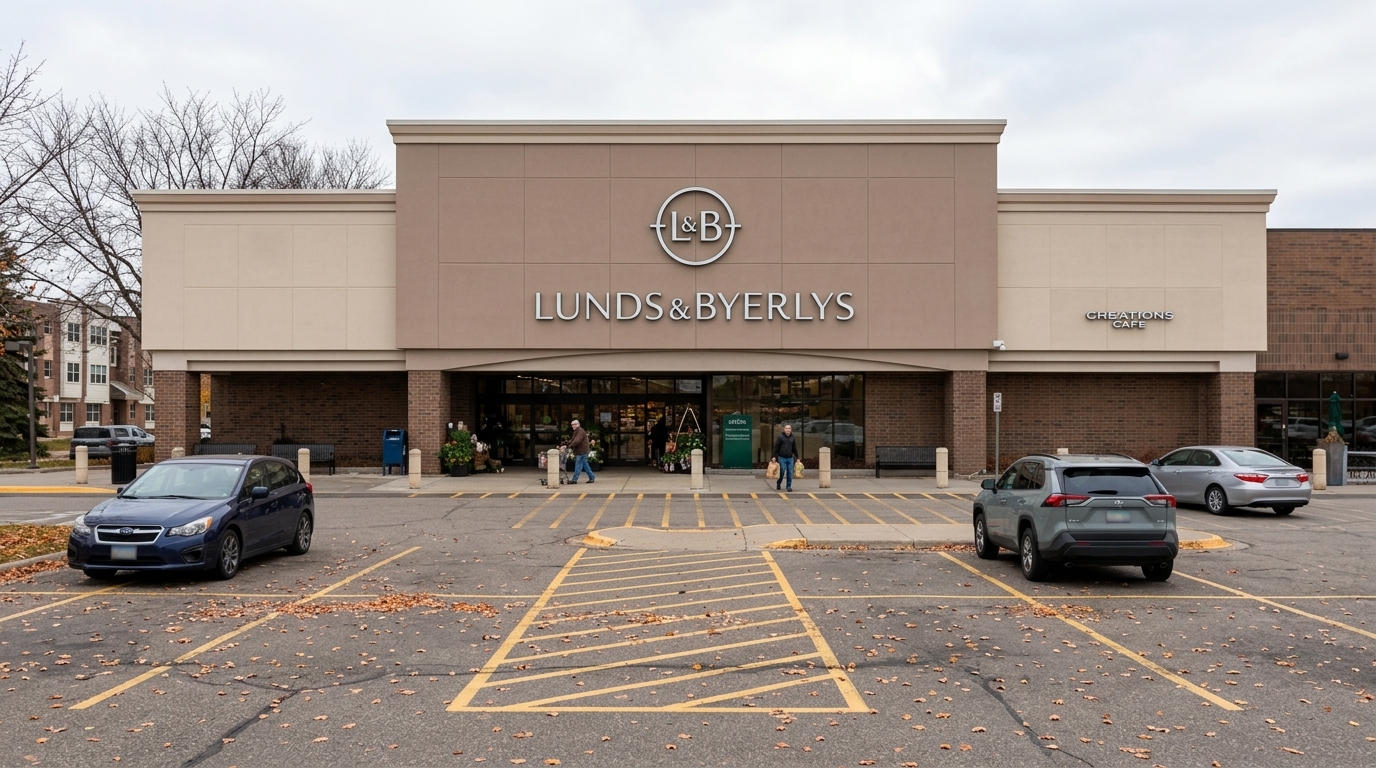
Lunds & Byerlys is a family-owned upscale supermarket chain headquartered in Edina, Minnesota, operating across the Twin Cities metropolitan area. The company specializes in high-quality fresh produce, prepared foods, gourmet products, and an extensive selection of wines and spirits, emphasizing exceptional customer service and local sourcing. The chain traces its lineage to two separate retail traditions that merged in the late 1990s, operating under their original names for nearly two decades before unifying as Lunds & Byerlys. The company is known for focusing on affluent suburban and urban neighborhoods, positioning itself in the upscale grocery segment with an emphasis on customer service, fresh departments, and prepared-food offerings.
As a privately held family business spanning three generations of the Lund family, Lunds & Byerlys has navigated Minnesota’s competitive grocery market while maintaining its premium positioning. Lund Food Holdings, Inc., the parent company of Lunds & Byerlys, operates as a privately held, family-owned business with no public trading or external investors, a structure established following the 1997 merger. In 1991, Russell T. Lund III (Tres) became president and CEO of Lunds and acquired Byerly’s Inc. in 1997, a merger that resulted in Lund Food Holdings, Inc. The company has continued to evolve through the early 2000s and 2020s with digital offerings, store expansion, and format innovation while responding to shifting market dynamics.
History
Lund began his grocery career in 1922 at Hove’s, a small corner grocery store located on the corner of Lake Street and Hennepin Avenue in Minneapolis. Within three months, he became a full-time team member and a 10 percent partner in the cheese and cracker department. An entrepreneur by nature, Lund experimented with popped and packaged popcorn to sell in Hoves’ cracker department. In 1937, armed with retail grocery experience and plans to sell popped popcorn to Los Angeles grocers, Lund moved his family to California. When Lund returned to Minneapolis and Hove’s in 1939, he used profits from the venture for real estate.
Lund went into real estate with Cordalis and built new Hove’s stores in Uptown in 1939 and Edina in 1941. Shortly thereafter, all Hove’s grocery stores were renamed Lunds, kickstarting the evolution of Lunds from a corner store to a regional grocery cornerstone. Lund opened two more store locations during this decade, Richfield in 1967 and Minnetonka in 1968. By the 1970s and 1980s, Lunds and Byerly’s were not only prominent grocery stores throughout the Twin Cities but common household names. The release of the Best of Byerly’s cookbook in 1985 was proof that the grocery chain was playing a pivotal role in the lives of its loyal shoppers.
In 1968, another family-run grocery store emerged when John Byerly opened Byerly’s in St. Louis Park. The opening of his $4 million, 92,000-square-foot flagship store in the Minneapolis suburb of St. Louis Park drew national interest, including a front page article in the Wall Street Journal. The luxury supermarket did $5 million in business in 1969, its first full year of operation. Byerly’s expanded with store openings in St. Louis Park in 1980, followed by Ridgedale, Bloomington, Roseville, and Burnsville, bringing the total to seven stores and sales of $130–150 million by mid-decade. These expansions underscored Byerly’s strategy of prioritizing premium customer service, such as personalized assistance and curated product assortments, which differentiated it from conventional supermarkets.
In mid-1990, Byerly sold controlling interest of the $200 million chain. Minneapolis-based Goldner Hawn Johnson & Morrison, and M.H. Equity Corp, an affiliate of Manufacturers Hanover Trust Company of New York, became equity partners. Byerly’s opened three stores in 1996 and thus gained a 30 percent increase in size in one year. The Chicago stores, located in the suburbs of Highland Park and Schaumburg, were the first of 10 stores the company planned for the area by the year 2000. However, Byerly’s failed to turn around two Atlanta supermarkets purchased from the bankrupt independent owner.
In April 1997, Byerly’s was purchased by Lund Food Holdings, Inc., parent company of Edina-based Lunds. The two high-quality grocers, which had been competitors in the Twin Cities for nearly 30 years, were merged in 1997 to form a 19-store chain with annual sales estimated at $400 million. Byerly’s retained its name and continued to operate its two production plants in addition to the Minnesota stores. The marriage of the two companies is considered an industry success story as both entities maintained separate identities under one parent umbrella while successfully combining their service-oriented philosophies. The two companies successfully blended everything from operations to training. Lunds chose not to purchase the two Chicago stores.
The two companies continued to operate under their individual names until April 2015, when the stores were rebranded Lunds & Byerlys. The 2010s saw the addition of new store locations in downtown Minneapolis, downtown St. Paul, Woodbury, Eden Prairie, Glen Lake, Prior Lake and White Bear Lake as well as a rebuilt Edina store. In 2021, Lunds & Byerlys opened a brand new store in the Nokomis neighborhood.
Operations & Footprint
The company opened its first supermarkets in the Uptown area of Minneapolis. The chain operates exclusively in the Minneapolis-St. Paul metropolitan area of Minnesota. The Lunds & Byerlys headquarters are still located at 50th and France. Lund Food Holdings, Inc., the parent company of Lunds & Byerlys, operates as a privately held, family-owned business with no public trading or external investors.
Lunds & Byerlys stores typically range in size from 45,000 to 51,000 square feet, featuring open layouts with wide aisles, clear signage, and prominent displays of fresh foods to facilitate an efficient and inviting shopping experience. These stores incorporate natural lighting and sustainable design elements, such as energy-efficient features, to create a bright, upscale atmosphere that emphasizes quality and accessibility. Byerly’s locations offered in-store United States Post Offices, full-service banks, coffee shops, floral departments, wines & spirits shops, and in-store Byerly’s restaurants. All Byerly’s branded restaurants have now closed.
With the completion of its acquisition of Byerly’s, Lund Food Holdings switched all its buying to Supervalu, Minneapolis, which was Byerly’s wholesaler. The company said the transition to Supervalu should be completed by midsummer.
Products, Services & Merchandising
The store was known for its great customer service and its deli and bakery. Byerly’s was commonly viewed as high-end grocery shopping, and prices were relatively similar to other retail stores selling the same brands. Beginning with a commitment to providing quality products and steering away from traditional advertising and pricing techniques, Byerly’s offered customers a first class shopping environment.
The brand introduced their new private label products as well as Real Food magazine, a quarterly publication filled with trend-forward recipes and in-depth articles written by Lunds and Byerly’s staff and national food experts. One such innovation was the Lunds & Byerlys Kitchen, a first-of-its kind, 143-seat restaurant and bar that was located in The Promenade of downtown Wayzata. It offered chef-crafted, freshly prepared foods, available for dining in or takeout, plus groceries, specialty products and an impressive selection of wine and local craft beers.
In 2006, the company launched its online grocery shopping service. Shoppers have the option of either picking up their groceries at certain stores or having it delivered to their home. Lunds & Byerlys aims to create a prepared foods destination with its L&B Kitchen area within its latest stores, featuring a host of prepared foods for breakfast, lunch and dinners that can be taken home or enjoyed in an inside or outside café seating area.
Work Environment & Employment
Lunds & Byerlys has an extended family of employees, which includes more than 55,000 people throughout its 75-year history. A tentative agreement includes industry leading and record setting UFCW Minnesota wage increases for grocery retail, increased PTO benefits, and a strengthened commitment to offering full-time careers. The company operates manufacturing facilities that supply its stores with prepared foods, deli items, and bakery products.
Business Model & Financial History
At the time of the 1997 acquisition, Lunds had an eight-store volume estimated at $90 million, while the Byerly’s stores had an annual volume of $350 million. The combination, excluding the Chicago stores, would give Lunds a volume of approximately $387 million. As an upscale grocer, the chain has positioned itself in the premium segment of the market, distinguishing itself through emphasis on quality, customer service, and specialized merchandise rather than through price competition.
Following the 1997 merger, the company generated incremental annual savings of $4 million to $5 million from backstage integration and increased efficiencies. The total number of stores grew from roughly 10 combined before the 1997 merger to more than 25 by 2015 and 28 by 2023, prior to the 2025 closure.
Recent Developments & Outlook
A new Lunds & Byerlys store opened in the Highland Bridge development in St. Paul, Minnesota in 2024. The new location replaced an existing store in nearby Highland Park, which closed on the same date. The Highland Bridge Lunds & Byerlys market is 51,000-square-feet, 20% larger than the old grocery store. The Apple Valley store held its grand opening on September 14, 2023. Known for its epicurean offerings, Minneapolis-based Lunds & Byerlys focused on the food experience at this latest outpost, with a centerpiece L&B Kitchen featuring prepared foods for breakfast, lunch and dinners.
The downtown St. Paul location, located on the ground floor of the Penfield apartments building, closed on March 26, 2025 after 11 years at the location. The grocer, which opened the location in 2014, said staffing and financial challenges contributed to the decision. After an arsonist set fire to the store in 2022, Lunds & Byerlys made significant repairs to reopen the store as quickly as possible. Along with reducing hours, the company also made the deli, meat and seafood departments self-service and updated produce selection to offset the increased costs of operation. The company cited significant staffing and financial challenges experienced over the past five years, and noted a significant shift to remote work for many downtown businesses and organizations.
Leave a Reply