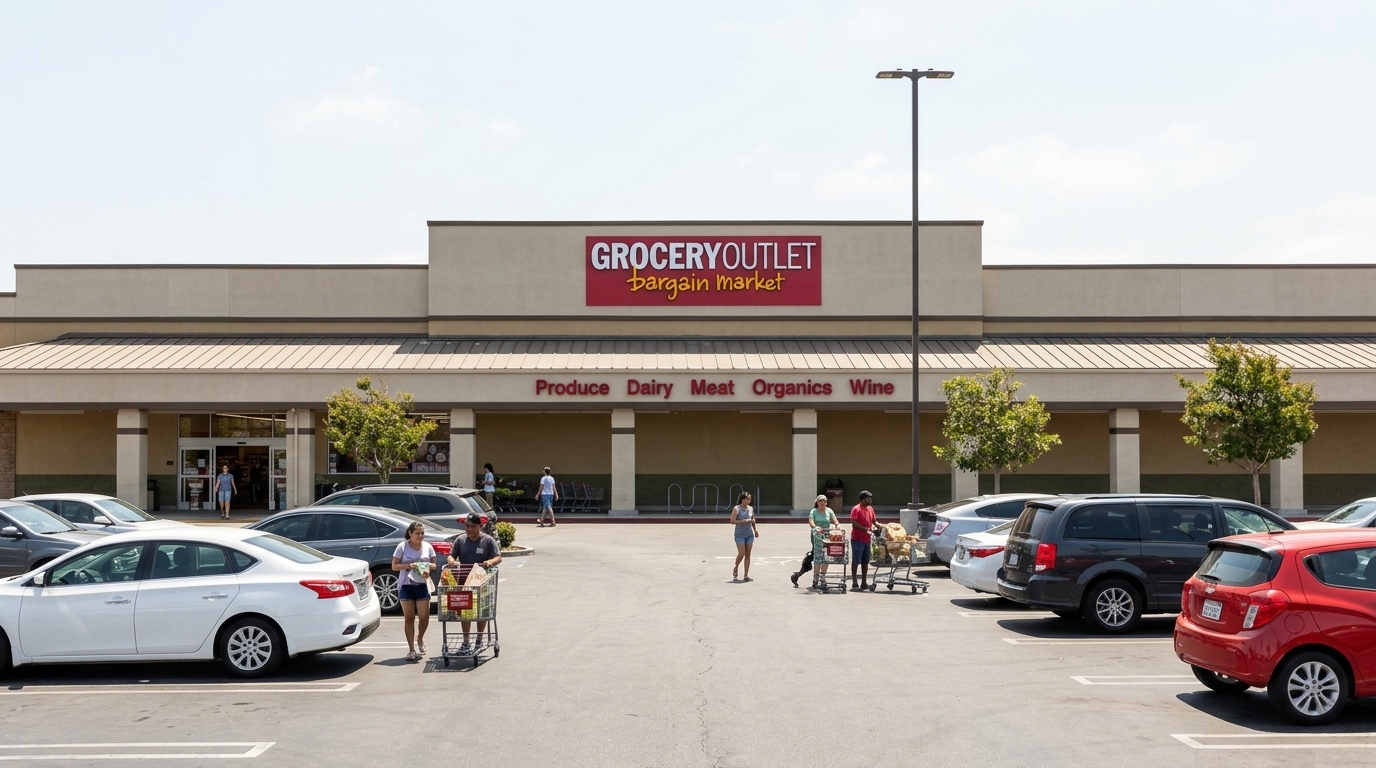
Grocery Outlet Holding Corp. is an extreme-value retailer of name-brand consumables and fresh products in the United States. The company operates a unique business model that offers customers significant savings on products through opportunistic purchasing and a consignment-based approach with independent operators. In the 1970s, under the leadership of Jim’s son Steven Read, Grocery Outlet developed its distinctive independent operator model, which remains a cornerstone of its business strategy.
The company operates stores in California, Washington, Oregon, Pennsylvania, Tennessee, Idaho, Maryland, Nevada, North Carolina, New Jersey, Georgia, Ohio, Alabama, Delaware, Kentucky, and Virginia. The company was founded in 1946 and is headquartered in Emeryville, California.
Retail Formats and Where It Operates
Grocery Outlet Holding Corp. operates as a retailer of consumables and fresh products sold through independently operated stores in the United States. It offers perishable department products, including dairy and deli; produce and floral; and meat and seafood. The company also provides non-perishable department products, such as non-perishable grocery, general merchandise, health and beauty care, frozen foods, and beer and wine.
The company operates stores in California, Washington, Oregon, Pennsylvania, Tennessee, Idaho, Maryland, Nevada, North Carolina, New Jersey, Georgia, Ohio, Alabama, Delaware, Kentucky, and Virginia. California has the largest concentration, with about 55% of all Grocery Outlet stores in the US.
The company distributes inventory through nine primary distribution centers, four of which it operates and five of which are operated by third parties. It has an in-house transportation fleet, as well as transportation partner relationships. The recent opening of a new 680,000-square-foot distribution center in Vancouver, Washington, in February 2025 further supports its growth initiatives.
Company Background
James Read founded the company on June 11, 1946, in San Francisco, California. He bought government surplus food products and sold them in previously vacant stores throughout San Francisco. He named his new company Cannery Sales. In 1970, Cannery Sales acquired Globe of California and renamed it Canned Foods Warehouse.
Following founder James Read’s death in 1982, his sons Steven and Peter took over company management. In 1987, the company was renamed Grocery Outlet. Grocery Outlet’s 100th store opened in 1995.
In 2001, Grocery Outlet acquired all remaining liquidated inventories of Webvan following the online grocery delivery service’s bankruptcy. During the same year, Grocery Outlet acquired online retailer Wine.com’s remaining inventory following that retailer’s bankruptcy. In 2011, Grocery Outlet acquired the Pennsylvania-based chain Amelia’s Grocery Outlet. The 2011 purchase of Amelia’s Grocery Outlet, a 13-store chain based in Pennsylvania, marked Grocery Outlet’s entry into the East Coast, and that chain was rebranded to Grocery Outlet in 2015.
The company promoted MacGregor Read and Eric Lindberg to co-CEO in 2006. Prior to their appointment, Read was vice president of real estate and Lindberg vice president of purchasing for the company. They took over for Steven Read, who became executive chairman of Grocery Outlet.
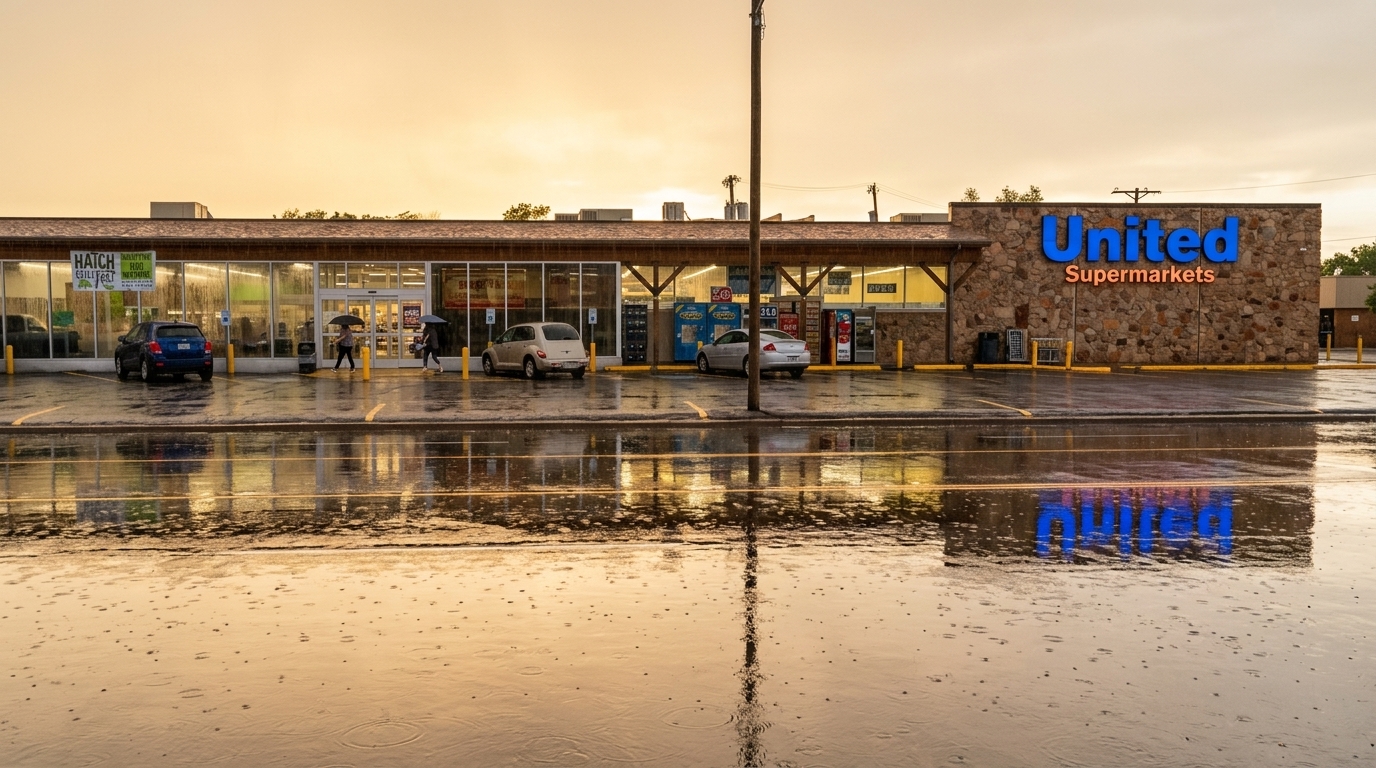
In February 2024, Grocery Outlet announced that it had agreed to acquire United Grocery Outlet, an extreme value, discount grocery retailer operating throughout the Southeastern United States. With 40 stores and a distribution center, the acquisition of UGO expanded Grocery Outlet’s presence into Tennessee, North Carolina, Georgia, Alabama, Kentucky and Virginia. The acquisition was completed on April 1, 2024, for a total purchase consideration of $62.5 million.
On March 4, 2026, Grocery Outlet announced the closure of 36 locations, 24 of which are in the eastern United States. While Grocery Outlet is closing 30% of its locations on the East Coast, the remaining 51 stores in that region are profitable.
Ownership, Structure and Financial History
Grocery Outlet Holding Corp. was incorporated in Delaware on September 11, 2014. In 2014, an investment fund affiliated with Hellman & Friedman LLC acquired approximately 80% of the company’s common stock, with management and family retaining approximately 20%. Hellman & Friedman distributed the remainder of its holdings in the company’s common stock to its equity holders in May 2020.
In June 2019, Grocery Outlet went public and shares of Grocery Outlet’s common stock began trading on Nasdaq Global Select Market on June 20, 2019, under the symbol “GO”. The company sold shares at a public offering price of $22.00 per share for net proceeds of $407.7 million.
The company aims for a strategic mix in its purchasing, targeting 60-70% opportunistic buys to maximize margins, while maintaining 30-40% through ‘Made To Order’ purchasing. The company’s product assortment includes opportunistically sourced products from leading CPG manufacturers such as Kraft Heinz, Kellogg’s, and Procter & Gamble, often at 40-70% below conventional retail prices.
Product Range and Store Brands
Inventory comes primarily from overstocks and closeouts of name-brand groceries, as well as private-label groceries. Grocery Outlet buys mostly closeout or seasonal merchandise, so particular brand names change often. The company’s stores also carry food staples such as fresh meat, dairy and bread. All products sold by Grocery Outlet are purchased directly from manufacturers, never from other retail stores.
One of the most popular sections in Grocery Outlet is labeled NOSH (natural, organic, specialty and healthy). Mainly because of this section, Grocery Outlet has attracted followers who want to buy ethical items (often vegan and/or plant-based) on a budget.
Grocery Outlet Holding Corp. officially launched a private label program, dubbed GO Brands. Products under two new brands – SimplyGO and GO Home & Haven – began rolling out in September 2024, while items in the GO Paw & Pamper brand launched in 2025. In total, 100 new private label SKUs under the first two brands became available in Grocery Outlet stores by the end of 2024. While some of the private label items are in the stores year-round, the company plans to offer seasonal items and rotate store brand offerings frequently so that they, too, become part of the dynamic store experience.
People and Workplace
Operators undergo extensive training on the job and in the classroom at Grocery Outlet University through a special certification process. The company provides professional development opportunities through Grocery Outlet University, which offers online courses and webinars to help employees develop their skills and knowledge. Additionally, district managers provide training and development opportunities tailored to the needs of their individual stores.
The company provides employees with a range of support including competitive wages, medical and dental benefits, paid vacation time, discounts on products, and access to training and development programs. The company also offers employee assistance programs, such as confidential counseling services, financial counseling, and legal services.
Employee Resource Groups are employee-led communities that foster connection, inclusion and belonging. Through shared experiences, open dialogue and educational and fun events, the groups help amplify voices, build relationships and strengthen the company’s culture.
Market Position and Competition
The vast majority of Grocery Outlet’s stores are independently operated by local married couples. Each store has flexibility in its product offerings to serve local tastes and demand. This independent operator structure differentiates the company from traditional grocery chains, creating a consignment-like model where local entrepreneurs maintain operational autonomy while Grocery Outlet provides inventory, distribution, and support.
The company faces competition from multiple retail segments, including traditional supermarket chains, warehouse clubs, and discount retailers such as Walmart, Trader Joe’s, and Aldi. Its extreme-value positioning and treasure-hunt shopping experience appeal to price-conscious consumers across demographic segments.
Notable Developments and Outlook
In January 2025, Grocery Outlet announced the appointment of Jason Potter as the Company’s President and Chief Executive Officer, effective February 3, 2025. Mr. Potter is a seasoned CEO, bringing more than 30 years of grocery retail experience and a track record of driving earnings growth and shareholder value. He joined Grocery Outlet from The Fresh Market, where he has served as CEO since March 2020. During his tenure, Mr. Potter led the successful transformation of that business, driving an award-winning customer experience and strong earnings growth.
Potter brings decades of executive leadership, including nearly five years of experience leading The Fresh Market, to Grocery Outlet as the discounter looks to regain its footing after a botched technology transition from a year and a half ago.
Fiscal 2025 was a year of important foundational work designed to meaningfully improve operations and return Grocery Outlet to its historical track record of strong performance and growth. The company welcomed Jason Potter as President and Chief Executive Officer, brought in strong leaders across the business, continued to make progress on critical systems stabilization work, and sharpened its focus to allow it to close execution gaps and better deliver distinctive value. This work was broad and deliberate: the company strengthened leadership across operations, merchandising, supply chain, finance and information technology; upgraded tools and support for independent operators; enhanced systems; and launched its store refresh program.
Leave a Reply