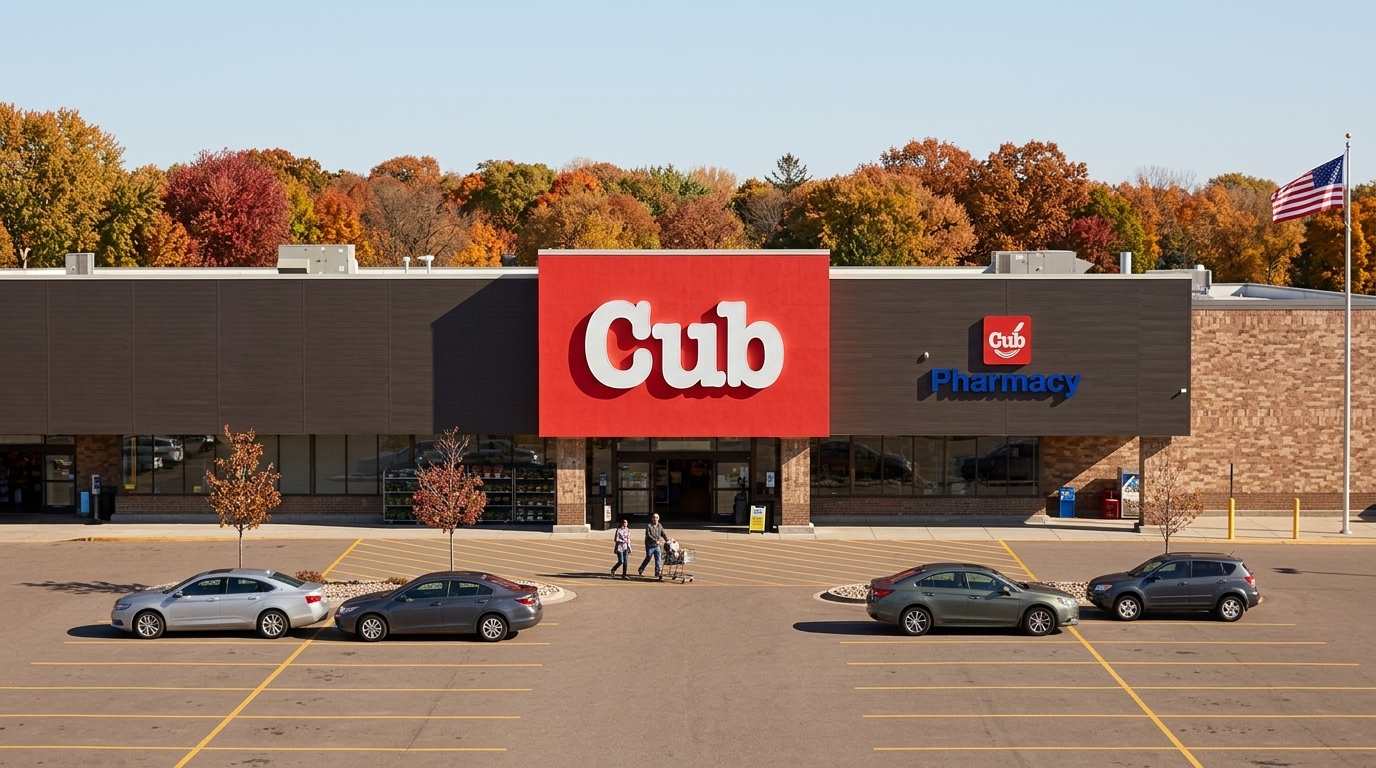
Cub is an American supermarket chain that operates stores in Minnesota and Illinois and is a wholly owned subsidiary of United Natural Foods, based in Providence, Rhode Island. The chain emerged in 1968 with an acronym standing for “Consumers United for Buying”, embodying a warehouse-style discount model that pioneered low-price, stripped-down grocery retail in the Upper Midwest. When it opened in the late 1960s, Cub was a revolutionary concept that offered lower prices with many “frills” eliminated. Today, the chain remains centered in its home market of Minnesota and the Twin Cities, where it holds significant competitive position despite facing sustained pressure from discounters and traditional supermarket competitors.
Cub Foods’ operations are concentrated primarily in the Twin Cities metropolitan area and surrounding Minnesota regions, plus a smaller presence in Illinois. The banner has experienced substantial contraction from its peak years, with the footprint narrowed through closures and divestitures. Recent store closures include a St. Paul location in August 2025 and a Brainerd store in July 2025. The sole surviving Cub store in Illinois is located in Freeport, which has operated continuously since its opening.
Retail Formats and Where It Operates
Cub operates stores in Minnesota and Illinois. The chain has historically emphasized a warehouse-style format with an emphasis on value through high-volume, low-margin economics. As of 2017, new stores opened in Blaine and Oakdale, with 18 Twin Cities locations remodeled. Remodeled stores include more grab-and-go foods, larger produce sections, and drive-up pharmacy service.
Cub stores offer fresh produce, meat, seafood, dairy, and baked goods, along with prepared foods and deli items, and many stores feature in-store pharmacies and liquor stores. Many Cub locations still feature on-site butchers, offering custom cuts and high-quality fresh meat rather than pre-packaged options, branded as “The Meat People.” In 2018, the word “Foods” was dropped from the brand name; remodeled stores reflect a broader assortment of goods to compete with Hy-Vee, Target, Walmart, Aldi, and online grocers.
Company Background
Cub Foods was founded in 1968 in Stillwater by brothers Charles and Jack Hooley, brother-in-law Robert Thueson, and Culver Davis Jr. The name “CUB” was Culver Davis Jr.’s nickname, and they coined the acronym “Consumers United for Buying” from it, making Cub Foods one of the first total discount food stores in the United States. The founders built the chain on the principle of eliminating operational frills to pass savings to customers through lower prices.
The chain was bought by Minnesota-based SuperValu in 1980 with five stores in the Twin Cities; after the purchase, the chain expanded to 83 stores in three states. Until 1998, WinCo Foods operated several Cub Foods stores. Cub Foods began operations in Colorado in 1986 but shuttered nine stores in 2003; Kroger acquired some of the former locations.
The chain expanded into the Chicago market in the early 1980s but faced significant contraction there. As part of SuperValu’s acquisition of New Albertsons, including Chicago-based Jewel-Osco stores, SuperValu divested its Chicago-area Cub Foods locations to an investment group headed by Cerberus Capital Management, to avoid market concentration issues. The last of the Chicago-area Cub Foods stores closed on December 10, 2006. Central Grocers Cooperative, which acquired a majority of the divested Chicago Cub locations, subsequently went bankrupt in 2017.
Ownership, Structure and Financial History
On July 26, 2018, it was announced that parent company Supervalu would be purchased by United Natural Foods for $2.9 billion. In January 2022, United Natural Foods announced that Cub would no longer be divested. Cub remains atop the Twin Cities market and is churning more profits for UNFI than it did in its last years under Supervalu; UNFI’s executives say it’s no longer for sale.
The grocery industry’s thin-margin structure shapes Cub’s business model. Cub has historically positioned itself as a value-driven supermarket chain emphasizing everyday low prices through high-volume sales and cost controls, originating from its warehouse-style model, though it has increasingly differentiated via convenience and variety rather than being the absolute lowest-price leader. A 2022 analysis found Cub’s aggregate grocery basket costs over 60% higher than those at Walmart and Aldi, contributing to perceptions of poor value amid inflation-driven price hikes. In response to two years of soft sales through 2023, Cub implemented aggressive price reductions starting in late 2024, targeting key categories to regain market share.
Product Range and Store Brands
The grocer’s private-label food offerings include Essential Everyday, Wild Harvest and Woodstock. Wild Harvest includes about 400 food SKUs, 70% of which are organic. Cub Foods has expanded its offerings to include more organic and natural foods, as well as products catering to specific dietary needs and preferences.
Cub offers free pickup, same-day delivery, and exclusive My Cub Rewards savings; customers earn fuel discounts on every grocery purchase. The chain has historically emphasized convenience and service innovations; in May 2000, the first MinuteClinics were instituted in Twin Cities area Cub stores.
Market Position and Competition
The majority of Cub Foods locations are concentrated in Minnesota, where it remains a dominant grocery chain in the Twin Cities metropolitan area and throughout greater Minnesota. Nearly all of Cub’s remodels are in areas where Hy-Vee opened stores nearby, including Maple Grove, Plymouth, and Brooklyn Park. The chain competes with full-service regional grocers, discount chains, and increasingly with e-commerce and big-box retailers.
Labor relations have also influenced Minnesota operations, with nearly 3,000 workers at Twin Cities Cub stores authorizing potential strikes in May 2025 over contract disputes with UFCW unions representing the workforce.
Notable Innovations and Legacy
Cub Foods is credited with many innovations, such as the first grocery checkout conveyor belt system. This operational innovation emerged from the chain’s focus on efficiency and cost reduction. The company also pioneered the modern warehouse-grocery concept that emphasized volume and low prices over service amenities, establishing a template widely adopted across the industry.
Notable Developments
Recent closures include a Baxter location in September 2025, affecting 235 employees, and a St. Paul Midway store in August 2025, impacting 96 employees. United Natural Foods is selling three Cub grocery stores in the Twin Cities to Jerry’s Enterprises, its largest Cub franchisee, continuing the company’s move away from direct retail exposure. The chain faces structural pressures common to traditional supermarkets: rising labor and logistics costs, competition from discounters and online grocery, and evolving consumer preferences toward value and convenience.
Leave a Reply