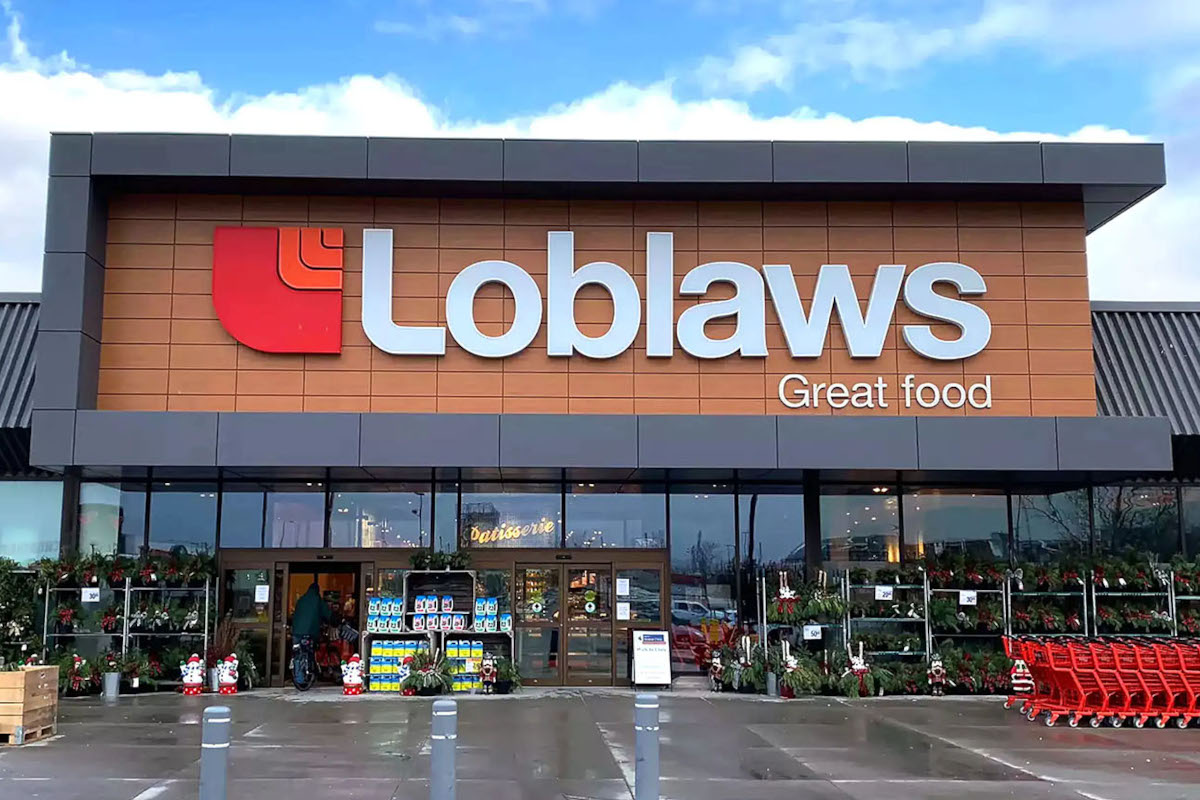
Loblaw is Canada’s largest grocery and pharmacy retailer, with a national network that spans supermarkets, discount stores, pharmacy-led locations, and wholesale-style formats. The company is known for its scale, broad banner portfolio, and strong position in both food retail and household essentials. It serves customers across Canada through a mix of mainstream, value-focused, and premium store concepts.
The chain is especially recognized for combining grocery, pharmacy, and general merchandise under one corporate umbrella. That structure gives it a strong role in Canadian daily shopping and makes it one of the most influential retailers in the country.
History
Loblaws Companies Limited was founded in 1919 when Theodore Loblaw, a former employee of a Toronto wholesale grocer, opened his first self-service grocery store on the city’s Dundas Street West. The store emphasized low prices and high volume — a radical departure from the clerk-assisted, credit-based model of early 20th-century grocery retail. Loblaw’s innovation established the template for modern supermarket operations in Canada.
The company expanded steadily through the 1920s and 1930s, opening dozens of stores across Ontario under the Loblaw and Loblaws banners. In 1947, it went public on the Toronto Stock Exchange, financing further regional expansion. By the 1950s, Loblaws operated several hundred stores and had become the dominant grocery retailer in central Canada.
In 1956, Loblaws acquired Dominion Stores, a significant competitor with deep roots in Eastern Canada, substantially broadening its geographic reach and store footprint. Throughout the 1960s and 1970s, the company continued to consolidate regional chains and modernize its operations, investing in larger formats and improved distribution networks.
In 1988, George Weston Limited, a diversified holding company with interests in bakeries, food manufacturing, and real estate, acquired full ownership of Loblaws Companies Limited. This acquisition placed Loblaws within a larger corporate structure while maintaining operational autonomy. The Weston family, which had built the bakery business dating back to 1882, became the ultimate controlling shareholder.
The 1990s brought significant strategic shifts. Loblaws divested non-core assets and refocused on grocery retail. In 1998, it acquired Richman’s, a discount grocery banner. Between 2001 and 2013, Loblaws made several important acquisitions: it bought out the remaining independent franchisees of its Loblaws and Provigo banners, expanded the No Frills discount format, and acquired Shoppers Drug Mart in 2013 — a major move that added over 1,200 pharmacy and convenience locations to its portfolio and created a significant non-grocery revenue stream.
The company faced notable challenges in 2013 when it announced a major restructuring plan following operational difficulties and competitive pressures from U.S. discounters. A major IT systems outage in 2012 had disrupted operations and eroded customer confidence. The restructuring included store closures, workforce reductions, and a strategic pivot toward the discount market.
In 2021, Galen G. Weston Jr., a member of the Weston family, became Executive Chairman, signaling a tighter alignment between the controlling family and day-to-day governance. The company remained under Weston family control through George Weston Limited.
Operations & Footprint
Loblaws operates as a multi-banner enterprise across Canada, with a particularly strong presence in Ontario, Quebec, and Atlantic Canada. As of 2024, it operated approximately 2,400 stores under various banners, making it one of the largest grocery retailers in North America by store count.
The company’s banners span multiple price tiers and formats. The mainline Loblaws banner targets mainstream and upscale segments; Provigo operates in Quebec; No Frills and Ziploc serve the discount segment; Shoppers Drug Mart and Shoppers Optimum operate as pharmacy-led convenience stores; and T&T Supermarket serves Asian and international customers, particularly in Western Canada. This portfolio structure allows Loblaws to serve diverse customer segments and geographies simultaneously.
Loblaws owns and operates a substantial network of distribution centers across Canada, providing logistics and supply-chain support to its store network. The company also manages significant real estate assets, owning or leasing most of its store locations. George Weston Limited remains the parent company and controlling shareholder; Loblaws itself is not publicly traded.
The company has expanded into fuel stations at select locations and operates multiple private-label brands across its portfolio, including President’s Choice (its flagship own-brand), which spans grocery, prepared foods, and specialty categories.
Products, Services & Merchandising
Loblaws operates a full-line grocery model, stocking produce, meat, seafood, dairy, bakery items, and packaged goods. Most banners include pharmacy services; Shoppers Drug Mart locations operate as pharmacy-anchored convenience stores. Select locations feature in-store delis, butcher counters, and bakeries.
The company’s private-label strategy is a defining feature. The President’s Choice brand, launched in 1985, has become one of Canada’s most recognized grocery labels, competing on quality and value across hundreds of SKUs. Additional private-label lines serve different customer segments and price points.
Pricing strategy varies by banner: No Frills and Ziploc pursue an everyday-low-price (EDLP) model; mainline Loblaws and Provigo balance promotional and regular pricing; and Shoppers Drug Mart operates convenience pricing. This segmentation reflects Loblaws’ deliberate strategy to serve different income and shopping-frequency segments.
Loblaws offers loyalty programs (PC Optimum is the primary program) that track customer purchases and deliver personalized offers. Online ordering and delivery services have expanded since the mid-2010s, with varying availability by location and banner. Curbside pickup became more prominent following the COVID-19 pandemic.
Work Environment & Employment
Loblaws employs approximately 190,000 people across its store, distribution, and corporate operations as of 2024, making it one of Canada’s largest private employers. Unionization is widespread: many store locations are represented by unions including the United Food and Commercial Workers (UFCW) and Unifor, particularly in Ontario and Atlantic Canada.
The company has faced periodic labor disputes. In 2022-2023, a series of negotiations with UFCW locals highlighted wage and working-condition demands, with strikes and work actions at select locations. These negotiations reflected broader pressure on retail wages and conditions across the grocery sector.
Loblaws has faced public scrutiny regarding worker treatment and compensation relative to company profitability, particularly during inflationary periods. The company has invested in training and advancement programs but, like most grocery retailers, operates in a sector characterized by relatively modest wage growth and limited full-time positions for many roles.
Business Model & Financial History
Loblaws operates in the inherently thin-margin grocery business, where success depends on high volume, efficient operations, and cost discipline. As a multi-format operator, it uses discount banners (No Frills) to compete on price while operating higher-margin mainstream and upscale formats under the Loblaws and Provigo names, allowing it to capture customers across income segments.
The acquisition of Shoppers Drug Mart in 2013 for approximately CAD $12.3 billion was transformational, adding a steady, higher-margin pharmacy and convenience-retail revenue stream that partially offsets the thin margins of traditional grocery operations. This diversification has become central to the company’s profitability profile.
Loblaws has benefited from significant scale advantages: its size allows centralized procurement, private-label manufacturing, and distribution economies that smaller competitors cannot match. However, it remains vulnerable to Amazon-led e-commerce disruption, U.S. discounters like Walmart and Costco, and regional competitors in specific markets.
The company is not publicly traded; it is held within the George Weston Limited structure, which is itself a subsidiary of Wittington Investments Limited, the family holding company of the Weston family. This private ownership structure insulates it from quarterly earnings pressure but also limits transparency and access to capital markets.
Competitive Landscape
Loblaws faces competition across multiple fronts. In traditional grocery, its main rivals are Sobeys (Atlantic Canada and Western Canada), Metro (Ontario and Quebec), and Costco (membership-based bulk). In the discount segment, Walmart Canada and discount banners compete directly. E-commerce and online grocery shopping, led by Amazon and other digital-first retailers, represent an ongoing structural challenge.
Regional competitors remain significant in specific markets: in parts of Western Canada, Save-on-Foods and independent grocers hold strong positions. In Quebec, IGA and other banners retain customer loyalty. Loblaws’ multi-banner strategy is designed precisely to compete across these diverse regional and segment-based battlefields.
The company’s main structural differentiators are scale, the strength of President’s Choice private-label, integrated pharmacy operations via Shoppers Drug Mart, and geographic density in its core markets. However, it has ceded some market share to discounters and e-commerce operators in recent years, reflecting broader industry consolidation and shifting consumer preferences.
Recent Developments & Outlook
In 2023-2024, Loblaws announced a strategic pivot toward smaller, more frequent store formats and increased investment in omnichannel capabilities. The company has been testing smaller store designs and expanding online order pickup and delivery services to compete more effectively in urban markets and reach time-pressed customers.
Food price inflation, which accelerated in 2021-2023, created both opportunity and reputational risk for Loblaws. The company benefited from margin expansion as input costs rose, but faced public criticism and regulatory scrutiny regarding pricing practices and corporate profitability during a cost-of-living crisis. In 2024, a temporary price reduction initiative aimed at select categories sought to address public pressure.
Sustainability and supply-chain transparency have become increasingly important to Loblaws’ positioning, with initiatives around sustainable packaging, food waste reduction, and sourcing practices. The company has committed to net-zero emissions targets by 2050, though near-term progress metrics remain under development.
The outlook for Loblaws reflects broader grocery-sector dynamics: margin pressure from discounters and e-commerce, labor cost inflation, the need for continued technology investment, and structural shifts in consumer shopping behavior. Its scale and integrated operations (particularly Shoppers Drug Mart) position it well to absorb these pressures, but sustained investment in stores, supply-chain modernization, and digital capabilities will be necessary to maintain competitive position.
Leave a Reply