
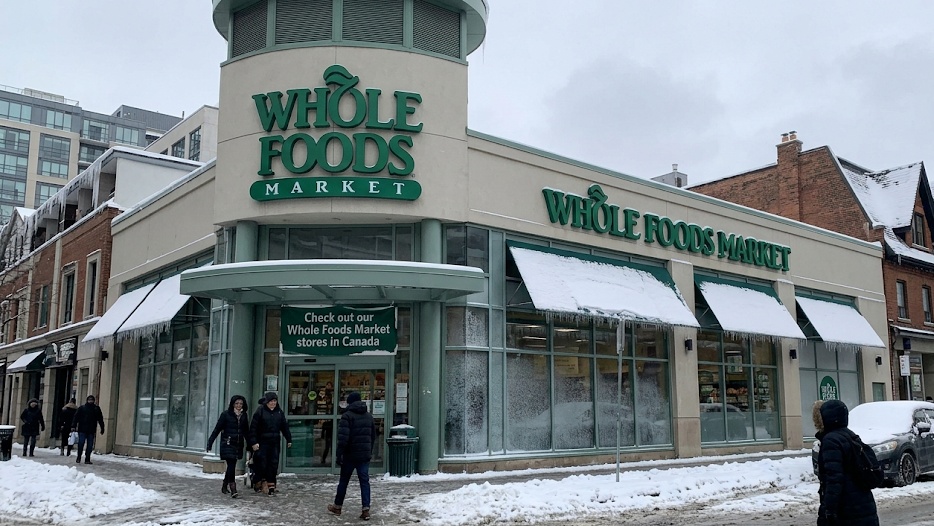
Whole Foods Market is an American premium grocery chain with a Canadian presence in Ontario, British Columbia, Quebec, and Alberta. In Canada, it operates as a specialty supermarket focused on natural and organic foods, prepared meals, and higher-end grocery shopping.
The Canadian business remains relatively small compared with Whole Foods’ U.S. footprint, but it continues to be an important urban grocery option in major Canadian cities. In 2025 and 2026, the chain also signaled renewed expansion in Canada, including a new Toronto store planned for King Street West.
History
Whole Foods Market entered Canada in 2002 with a Toronto location in the Yorkville area. The chain later expanded into Vancouver, Victoria, Ottawa, and the Greater Toronto Area, building a small but recognizable Canadian presence among health-conscious and premium grocery shoppers.
In 2017, Amazon acquired Whole Foods Market, giving the brand a new corporate parent and access to stronger technology, logistics, and retail integration. In Canada, the chain continued operating under the Whole Foods name while gradually refining its store mix and market strategy.
Operations & Footprint
As of 2026, Whole Foods Market operates 12 stores in Canada, with locations in Ontario and British Columbia and one each in Ottawa and Victoria. The company’s Canadian store list includes Vancouver-area locations such as West Vancouver, Kitsilano, Burnaby, North Vancouver, Robson, and Cambie, plus Greater Toronto Area stores in Yorkville, Markham, Mississauga, and Oakville, as well as Landsdowne Park in Ottawa and Victoria, British Columbia.
In 2025, the company said it was actively exploring new sites to expand its footprint in Canada, and a new Whole Foods location at King Toronto in downtown Toronto was announced as a major future opening. That store is expected to anchor the King West area and marks the company’s first new Canadian lease in more than six years.
At the same time, Whole Foods confirmed the closure of its Leaside and Yonge & Sheppard stores in Toronto, showing that the brand is reshaping its Canadian network even as it expands in select growth markets.
Products, Services & Merchandising
Whole Foods stores in Canada offer organic produce, meat, seafood, dairy, bakery items, prepared meals, specialty groceries, wellness products, and natural household goods. The chain is especially known for premium sourcing standards and a broad assortment of health-oriented products.
The Canadian stores also feature locally sourced products alongside Whole Foods’ signature private-label and specialty offerings. That combination helps the banner appeal to shoppers who want both premium grocery quality and locally relevant assortments.
Work Environment & Employment
Whole Foods Market employs staff across produce, meat, seafood, bakery, prepared foods, grocery, cashier, and management roles. Because the stores are department-heavy and service-oriented, the work environment is often busy and detail-driven.
The chain tends to attract employees interested in premium grocery retail, organic food, and specialty departments. In Canada, team size and store complexity can vary by market, but the overall workplace model remains centered on quality and customer service.
Financial Profile
Whole Foods Market is not separately publicly traded; it is a subsidiary of Amazon. Its Canadian operations are therefore not reported independently as a public company, but as part of Amazon’s broader retail business.
Its value in Canada comes from serving a premium grocery niche in major urban markets. The combination of organic products, prepared foods, and brand prestige gives Whole Foods a distinct position in Canadian food retail.
Competitive Landscape
Whole Foods competes in Canada with premium and specialty grocers such as Farm Boy, Pusateri’s, Longo’s, Urban Fare, independent organic markets, and upscale supermarket departments within larger chains. Its strongest advantages are brand recognition, organic specialization, and urban positioning.
The banner appeals to shoppers who want a higher-end grocery experience and are willing to pay for premium quality, specialty items, and convenience. Its Canadian presence is therefore smaller than mainstream chains, but it is highly targeted and strategically placed.
Current Status & Outlook
As of 2026, Whole Foods Market remains a niche but visible premium grocer in Canada, with 12 operating stores and at least one major new Toronto opening in development. The company is actively exploring new sites while also closing weaker or higher-cost locations in Toronto.
Its Canadian future appears focused on dense urban neighborhoods and affluent markets where its assortment and price positioning fit customer demand. With Amazon’s backing, the banner is positioned to keep expanding selectively rather than chasing broad national coverage

Leave a Reply