
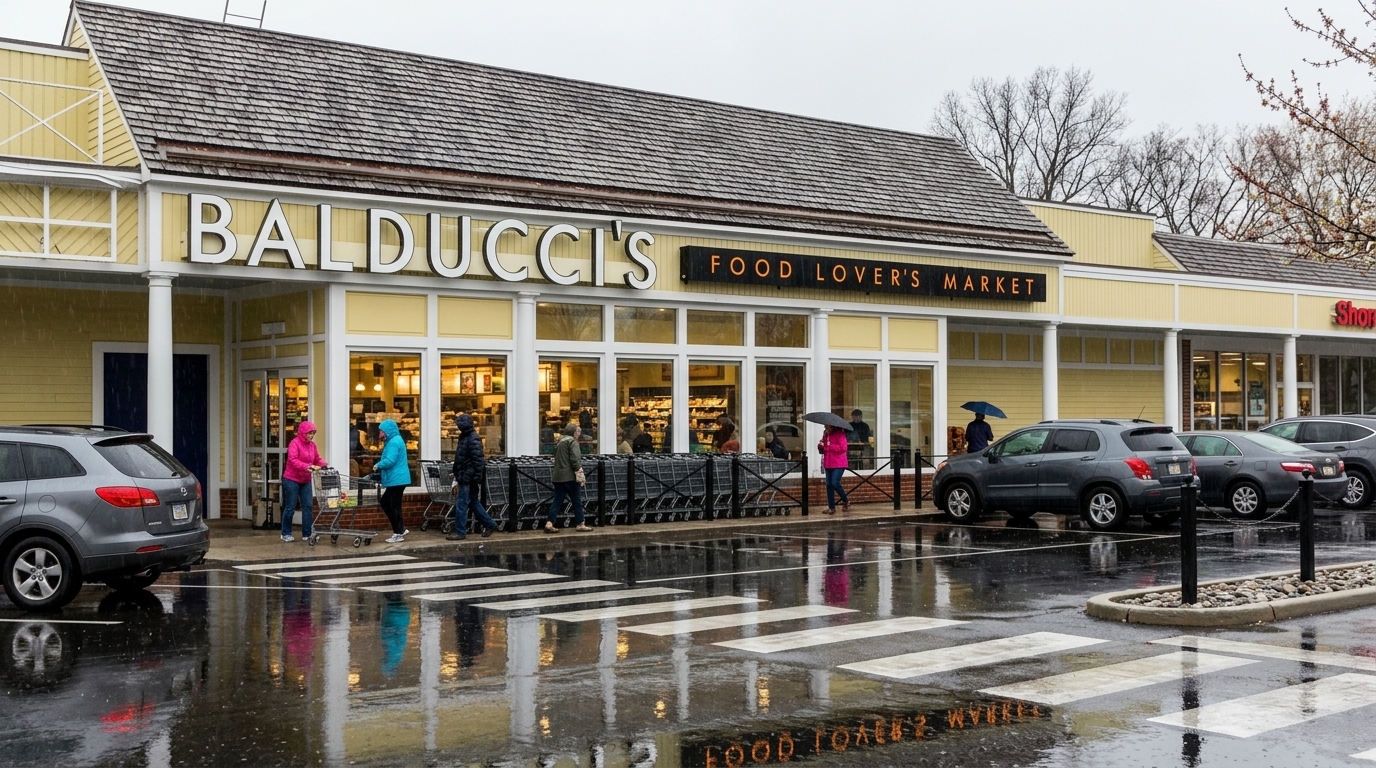
Food writer James Beard was a regular customer and noted that Balducci’s always sold “the best of the best, at the right price.” Andy’s merchandising instincts helped polish the Balducci brand, and he is credited with featuring snowy white silver dollar mushrooms from Pennsylvania farms for 39 cents a pound, which became a major draw for early Balducci’s customers. The business has endured multiple ownership transitions and a flagship closure, but continues to operate as a specialty grocer with a focus on gourmet ingredients and high-touch customer service.
History
The Balducci family patriarch, Louis, an immigrant from Corato, Italy, began his family’s career in the New York City food trade by selling fruits and vegetables from a pushcart in Greenpoint, Brooklyn between 1914 and 1925. The family returned to Italy in 1925, returned to the United States in 1939 and in 1946 Louis and his wife Maria opened a fruit stand at the corner of Christopher Street and Greenwich Avenue in Greenwich Village. In 1972, they moved across Sixth Avenue into a storefront at Sixth and West 9th St. This location became legendary in New York food circles, drawing chefs and home cooks seeking premium seasonal produce and imported delicacies.
Family members expanded the business through the mid-20th century. Andy Balducci eventually took over ownership of the company, while his son-in-law, Kevin Murphy, headed up the Baldor division, working tirelessly to gain market share in a competitive wholesale market. In 1991 Kevin established Baldor as an independent company, moving the warehouse to a facility on Borden Ave in Long Island City, taking with him a handful of Balducci employees. Baldor Specialty Foods evolved into one of the largest produce and specialty food distributors in the Northeast and Mid-Atlantic regions, serving fine dining establishments and high-end markets.
There was news that the three siblings had a dispute with their father Louis, and this dispute, was apparently responsible for the departure of Grace and Joe in 1985. In 1985, Grace and Joe started a new store, Grace’s Marketplace on the Upper East Side. Louis B. left Balducci’s in the late 80’s and became a partner in Agata & Valentina, a similar specialty grocery shop on the Upper East Side that opened in 1993. Internal family divisions reflected the complexities of sustaining a multi-generational food business.
With their daughters uninterested in taking over the store, Andy and Nina sold in 1999 for $26.5 million to Sutton Place Gourmet, a Maryland-based company. The flagship store in on Sixth Avenue in Greenwich Village closed in January 2003, marking the end of an iconic era, though a branch on West 66th Street remained operational. In November 2003, the company was purchased by an investment group led by Bear Stearns Merchant Banking.
In April 2009 Balducci’s was sold to Kings Food Markets, a portfolio company of Angelo, Gordon and Co. In 2016, Kings and Balducci’s were sold to GSSG Capital. In 2020, Balducci’s filed for bankruptcy, and was sold to Albertsons. KB US Holdings, the parent entity, filed for Chapter 11 bankruptcy protection in August 2020, citing pandemic-related revenue declines. The bankruptcy and acquisition by Albertsons ensured continuity of the brand under a national supermarket operator.
Operations & Footprint
There are currently eight full-service retail stores in Connecticut, Maryland, Virginia, and New York (Scarsdale). In 2012, Balducci’s returned to New York with Balducci’s Gourmet on the Go Café in Hearst Tower, which serves prepared meals and soups as well as a gourmet salad and coffee bar. There are four Balducci’s Express locations: three in JFK Airport in New York and one at the Leesburg Corner Premium Outlets in Virginia. There also was a Balducci’s Gourmet on the Go Café located in the Bloomberg Children’s Center at the Johns Hopkins Hospital, but it closed in 2024.
The chain operates as a subsidiary of Albertsons Companies, Inc., giving it access to larger distribution networks and operational resources while maintaining its distinct brand identity and premium positioning. Store locations concentrate in affluent areas of the Northeast and Mid-Atlantic, reflecting the customer base that seeks high-quality gourmet foods and specialty ingredients.
Products, Services & Merchandising
Balducci’s emphasizes fresh, premium offerings across multiple categories. They provide a wide array of fresh produce, meat, seafood, bakery items, deli selections, and frozen foods. The company also features pantry staples, international cuisine, beverages, wine, beer, spirits, and general merchandise. Each full-service location includes chef-prepared foods, catering services, floral arrangements, housewares, and gift items, creating a comprehensive upscale grocery experience.
The company operates proprietary private-label products and sources specialty items that appeal to discerning home cooks and culinary professionals. Customers can shop online, order curbside pickup, or opt for grocery delivery. They offer a loyalty program for personalized deals and rewards. These conveniences reflect modern grocery expectations while preserving the in-store shopping experience that has long defined the brand.
Competitive Landscape
Balducci’s competes in the upscale specialty grocery segment alongside regional premium grocers and national chains offering gourmet sections. The chain’s focus on curated sourcing, chef knowledge, and full-service departments—particularly fresh departments like butcher and seafood—distinguishes it from discount-focused competitors and mass-market operators. The rise of online grocery shopping, delivery services, and discount premium chains has intensified competition, requiring operators like Balducci’s to balance convenience with the personalized service and premium in-store experience that justify higher price positioning.
Regional specialty grocers and emerging direct-to-consumer models present ongoing competitive pressure. However, Balducci’s long history, brand recognition in its core markets, and ownership by a national grocer with scale advantages provide structural support. The integration with Albertsons, one of the largest grocery operators in the United States, positions the chain to leverage procurement scale and logistics while maintaining premium brand positioning.
Recent Developments & Outlook
Following its 2020 acquisition by Albertsons during pandemic-driven retail consolidation, Balducci’s has stabilized operations and maintained its store footprint in the Mid-Atlantic region. The chain has continued to develop convenience formats, including airport and hospital café locations, while expanding digital capabilities through online ordering and delivery. As of 2024, one of the hospital-based café locations closed, suggesting ongoing portfolio adjustments.
The company faces persistent structural challenges common to specialty grocers: narrow margins, real estate costs in affluent urban and suburban markets, and the rising economics of fresh food sourcing and preparation. Digital integration and omnichannel capabilities remain priorities for remaining competitive. Balducci’s strategy appears focused on maintaining premium positioning and leveraging Albertsons’ operational and logistical support to sustain its niche in the specialty grocery sector. The chain’s long brand heritage and emphasis on quality provide foundations for differentiation, even as discount and convenience-focused competitors reshape broader grocery dynamics.
Leave a Reply