
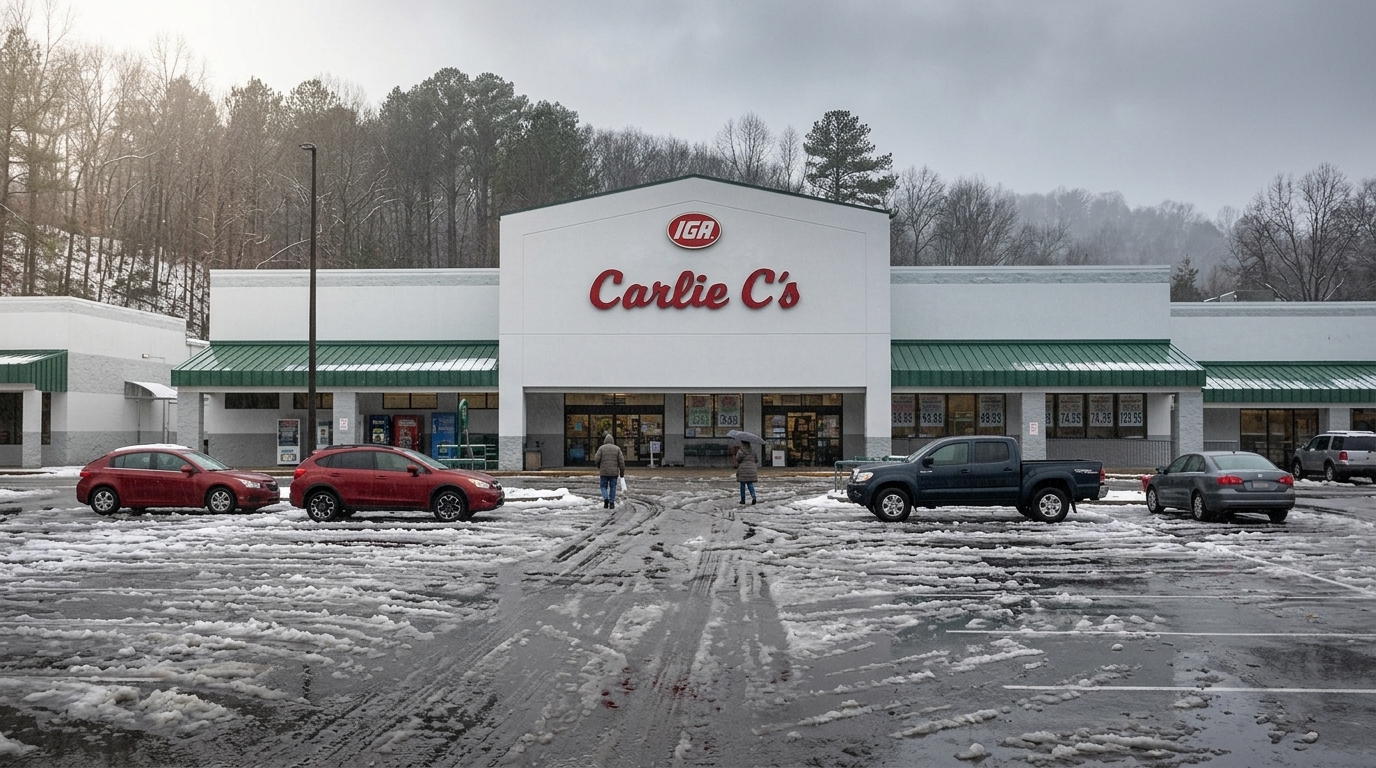
Headquartered in Chicago, Illinois, IGA was founded in 1926 as the Independent Grocers Alliance in the United States. IGA was founded in May 1926 when a group of 100 independent retailers in Poughkeepsie, New York, and Sharon, Connecticut, led by J. Frank Grimes, organized into a single marketing system, primarily to help independent grocers compete against the emerging national grocery chain, A&P. The organization operates as a voluntary alliance of independently owned and operated supermarkets, allowing members to retain local control while benefiting from collective resources in purchasing, marketing, and branding. IGA management provided marketing guidance and consistent supply chain access to its IGA stores, many located in smaller cities and towns across the U.S., using the “Hometown Proud” slogan.
As of 2023, IGA was located in 22 countries. There were 763 locations in 38 states and territories in the US. The alliance operates in diverse markets ranging from rural communities to major metropolitan areas, with a focus on independent ownership and community involvement. The states with the highest concentration are North Carolina, South Carolina, and Kentucky.
History
The Independent Grocers Alliance was created in 1926 by a group led by Chicago accountant J. Frank Grimes. It was designed as a network for independent grocers who sought to use the purchasing power of the association to compete with the rising chain-grocery companies. By the end of its first year, the group had expanded to include more than 150 retailers, and shortly after its founding, the company began making and marketing its own canned food brand. By 1930, over 8,000 grocery stores were using the IGA name.
IGA had expanded its licensing arrangements to Canada in 1940, and by 1964, there were 760 IGA grocers there. However, it became clear that differing food regulations, competitive conditions and shopping habits were making it difficult to coordinate programs in the United States and Canada, so in 1964 Canada’s IGA distributors traded in their shares to form an autonomous IGA Canada.
In 1988, representatives from Tokyo-based C. Itoh Food Systems Co. approached IGA about introducing its store concept in Japan, Davids of Australia requested the same later that year. Subsequent partnerships were signed with distributors and retail companies in Korea, Singapore, China, Malaysia, Indonesia, India and Brazil, where IGA will operate its first franchised (rather than licensed) stores because of the lack of a single dominant wholesale distributor. In 1988, the IGA brand was introduced to Australia by Davids Holdings, when 10 stores became members of IGA. In 1992, IGA and Coca-Cola Co.’s international division launched a training project in the Pacific Rim called IGA University — a retail training affiliate designed to share knowledge of food distribution with retailers and wholesalers, regardless of their affiliation with IGA.
William Olsen was the company CEO until 1988, when he was replaced by Thomas Haggai, who retired in 2016. Afer Mark Batenic replaced Haggai, John Ross — a former lot boy, store manager, president of data analytics firm Inmar Intelligence and author of Fire in the Zoo — became IGA’s new president and CEO. Ross assumed leadership in late 2017 and has focused on expanding digital marketing capabilities and support services for member retailers.
In 2024 IGA purchased Scanner Applications, owned by Inmar, to streamline in-store promotions. This acquisition reflected IGA’s broader strategy to invest in technology infrastructure supporting its independent retailers.
Operations & Footprint
IGA, INC. is an international affiliation of franchised grocery stores that are independently owned and operated. The alliance oversees several resources shared among the member stores, including, most visibly, the IGA store brand products and their logistical distribution network. The alliance also provides training and assessment programs and an online advertising platform. It regularly coordinates promotional events and charity fundraising events that benefit store communities.
International operations are structured through regional partnerships and subsidiaries. In Canada (apart from British Columbia), IGA is a group of independent grocers supplied by Sobeys, which franchises the name. Acquired by Sobeys as part of its purchase of the Oshawa Group Ltd., it now operates primarily in Quebec. IGA stores in British Columbia, excepting a few in the eastern part of the province, are independently owned and are operated by Georgia Main Food Group. The IGA brand in Australia is owned by Metcash, an Australian conglomerate retailer and wholesaler. The company supplies groceries, promotional materials, and other things to a large number of locally owned Australian supermarkets and a few other brands like Foodland and Friendly Grocer.
IGA maintains a significant presence across Asia and the Caribbean through licensed distributors. Walter Mart Supermarket is the first and only alliance member in the Philippines. The store has 47 locations in the country, mostly in Metro Manila and Luzon – from Gapan, Nueva Ecija in the north to Tanauan, Batangas, in the south. The network also operates in Ireland, Poland, Singapore, South Korea, Sri Lanka, and South Africa through partnerships with regional wholesalers and retailers.
Products, Services & Merchandising
IGA has been a trusted private label since the 1950s, known for consistent quality and strong everyday value. For nearly a century, the IGA Exclusive Brand private label line has been the trusted brand of choice for IGA shoppers. The brand underwent a modernization campaign in the 2010s to better reflect IGA’s positioning around fresh and local products. Beyond the core Exclusive Brand, That’s Italy offers an authentic Italian-imported product line that includes pasta, sauce and pesto, oil and vinegar.
IGA, Hy-Top, and Seven Farms organic brands offer Compare & Save programs and signage tools. Seven Farms represents IGA’s organic and natural product offerings, supporting the alliance’s emphasis on value-conscious shoppers seeking healthier options. IGA’s double-money-back guarantee on Exclusive Brand products distinguishes it among private labels and reinforces trust in the brand.
IGA supports member retailers through various digital and marketing tools. The alliance also provides training and assessment programs and an online advertising platform. We’ve got to make sure they’ve got digital tools. This is everything from online incentives, the ability to do bounce back offers, to keep the shopper in the store, access to digital manufacturer offers…all the things that other chains have. Member stores offer diverse formats ranging from small-format neighborhood grocers to larger supermarkets with full-service departments.
Work Environment & Employment
IGA member stores employ thousands of workers across the United States and internationally. Employment arrangements vary by store, as each location remains independently owned and operated. UFCW 1518 already represents hundreds of workers employed at franchise and corporate stores operating under the IGA and Fresh St. Market banners. These stores continue to operate normally with the addition of workers having the power to improve their working conditions and ensure their suggestions are heard by all levels of management. Unionization is present in some locations, particularly in Canada, though the majority of IGA stores are non-union workplaces.
While grocery employees were lauded as heroes in the beginning of the pandemic, recruitment and retention now top the list of serious challenges faced by retailers, who have employed many strategies to attract and retain workers, including increased wages and benefits, flextime, and training. IGA has commissioned a study on these labor issues facing the grocery industry and gathered resources to help members address the issue. The alliance supports training and development through its partnership with Coca-Cola and through internal programs designed to build skills among retail and management personnel.
Business Model & Financial History
IGA operates on a unique cooperative wholesale model that distinguishes it from traditional chain stores. The alliance acts as a wholesaler-backed network where member stores maintain ownership and operational control while benefiting from collective purchasing power, standardized branding, and shared services. This model proved particularly resilient during economic downturns, as independent ownership allowed stores to adapt to local conditions while maintaining overhead efficiency through scale.
This emphasis on neighborhood focus helped IGA stores maintain customer loyalty during the Great Depression, as they adapted to economic pressures while preserving the independent retailer model. The thin-margin nature of grocery retail means IGA’s competitive advantage lies in supporting members to operate efficiently in underserved markets where larger chains find economics less attractive.
IGA’s financial structure relies on member retail sales generating volume for its wholesaler-supplier partners and private label operations. As of 2026, the network included nearly 7,500 supermarkets in more than 30 countries, representing $80 billion in annual sales. The organization has historically avoided heavy debt financing, instead growing through organic member recruitment and expansion into new geographic markets as opportunities arose.
Competitive Landscape
IGA competes across multiple market segments and geographies. In the United States, it faces competition from national chains including Walmart, Kroger, and Albertsons, as well as regional operators and discount chains. The competitive advantage IGA emphasizes is local autonomy, personalized community service, and the ability to stock products tailored to neighborhood preferences—attributes large chains struggle to replicate at scale.
Collectively, it is the fourth-biggest competitor in major Australian supermarkets, after Coles, Woolworths and Aldi. In Australia, where IGA operates through Metcash, it competes as a major independent network against consolidated national chains. The model works particularly well in smaller markets and rural areas where population density makes dedicated large-format stores uneconomical for major chains.
IGA has positioned itself to compete on freshness, locality, and community integration rather than on price alone. IGA’s new tagline is “Local Equals Fresh.” The way the commercial goes is local retailers working with local family farmers because local equals fresh. This positioning differentiates member stores from warehouse-format and ultra-low-cost competitors by appealing to consumer demand for locally sourced, fresh products and the relationship consumers develop with family-owned retailers.
Recent Developments & Outlook
John Ross — a former lot boy, store manager, president of data analytics firm Inmar Intelligence and author of Fire in the Zoo — became IGA’s new president and CEO. Since assuming the role in late 2017, Ross has prioritized modernizing member retailers’ digital capabilities and expanding the range of services IGA provides. He noted that if IGA stores were taken collectively, they would likely be the fastest-growing independent grocery chain, as well as one of the larger grocery chains operating in the United States.
Strategic priorities under Ross’s leadership include strengthening private label offerings, expanding digital marketing and promotional tools, and fostering training programs to help members compete more effectively. We need to take those insights and those ideas, we need to make them portable, turn them in to a system, put them in our training library, so that anyone can copy and paste those things into their business. And then we need to give them some new tools: digital marketing and digital advertising.
IGA CEO John Ross spent May 19-20 in Washington, D.C. at the National Grocers Association’s (NGA) Fly-in for Fair Competition, where independent retailers, wholesalers, and state association executives gathered to advocate for a level playing field in the grocery industry. During meetings with representatives on Capitol Hill, the groups called for enforcement of the Robinson-Patman Act and legislation to reform credit card routing to lower swipe fees, in addition to calling on Congress to pass a strong Farm Bill.
Looking forward, IGA continues to invest in technology infrastructure and business support for members navigating an increasingly complex retail environment. The organization marked its centennial in 2026, reflecting a century of focus on enabling independent retailers to thrive in competitive markets through collective action while preserving local ownership and community ties.
Leave a Reply