
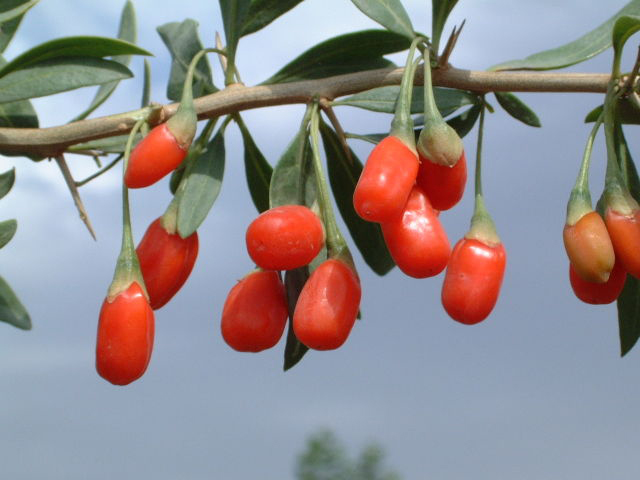
Goji berries are included in the Solonaceae or nightshade family (along with tomato, deadly nightshade, tobacco, potato, eggplant and chili pepper). These berries are also known as wolfberries and have the scientific name of Lycium barbarum. They are commonly found already shriveled and dried. Dehydrated Goji berries can be described as red raisins. These berries have a slightly sweet, sour and tangy taste. When dried, its shape and texture is similar to that of raisins.
Where They Can Be Found
Goji berries are normally found in subtropical and temperate regions like Mongolia, the Himalayas and China. In the market, these berries are found sold at Chinese herbal stores, health food shops and online stores.
What Goji Berries Can Do for Health
It is believed that Goji berries have been used even during the ancient civilizations of Tibet, Indiaand China. Herbalists from over 6,000 years ago have been using these berries for medicinal purposes. It is said that Goji berries have a number of benefits for the body. Goji berries are said to help maintain clear eyesight, improve fertility and sexual function, boost the immune system, improve blood circulation and promote a longer life.
Goji berries are an abundant source of beta-carotene and zeaxanthin. These chemicals are antioxidants that fight cell damage caused by free radicals. Zeaxanthin also protects the retina by soaking up the blue light that hits the eye. An increased consumption of zeathanthin-containing foods is believed to lower the risk of AMD or macular degeneration caused by aging. AMD is the leading cause of blindness in people 65 years and older.
Medical studies involving Goji berry extract suggest that it can prevent cancer cell growth, lowers cholesterol and reduce the levels of glucose in the blood. These studies however did not test the efficacy of Goji berries when consumed in beverage form, like Goji berry tea or juice.
Health Risks of Goji Berries
Consumption of Goji berries while taking particular medications might produce some side-effects. These berries may have interactions with blood-thinners, commonly known as anti-coagulants. An example of this kind of medicine is Warfarin (Coumadin®).
Two cases have been reported about this particular Goji berry-Warfarin interaction. Two elderly women who were both taking warfarin noted that they bleed very easily. It was found that they were also drinking Goji berry tea during the same period when they were taking warfarin. After stopping their consumption of the tea, their bleeding conditions returned to normal. What actually happened was that some yet unidentified phytochemicals in Goji berry tea inhibited the body’s metabolism of warfarin.
Goji berries also naturally contain atropine. This compound is an alkaloid that is considered as toxic and is also found in other foods classified under the Solanaceae family. Atropine contained in Goji berries however, are found to be below toxic levels.



Leave a Reply